
UAE’s Eastern Ports and Free Zones Are Reshaping Global Trade Flows After Recent Geopolitical Shifts
Strategic logistics corridors, expanding free zones, and multibillion-dollar agreements reinforce the UAE’s role as a central platform for international commerce and cross-border wealth structuring.
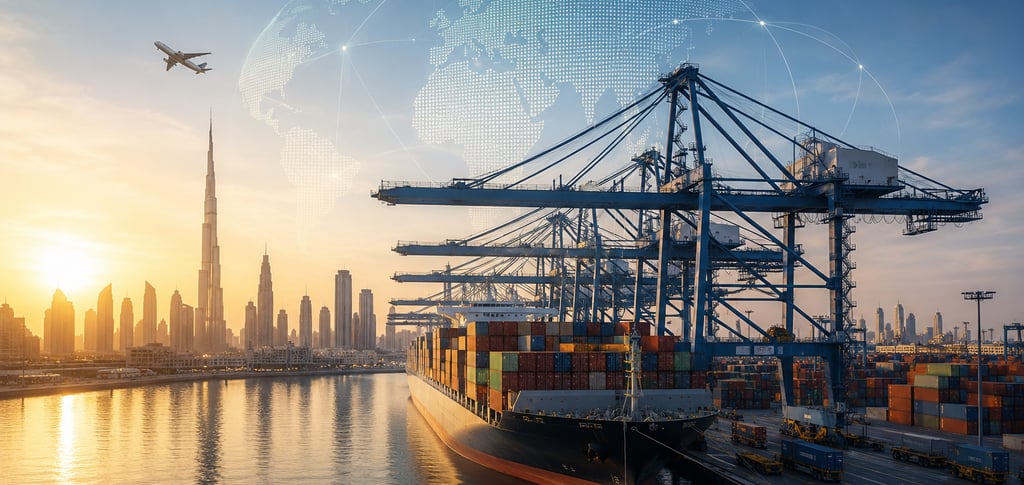
Global trade routes are entering a period of recalibration. Geopolitical tensions, supply chain disruptions, regional conflicts, and changing economic alliances have accelerated the search for new commercial corridors and more resilient operational structures.
Against this backdrop, the United Arab Emirates continues to strengthen its position as one of the most influential trade and logistics ecosystems in the world.
Recent developments involving the UAE’s eastern ports and expanding free zone activity illustrate how the country is increasingly becoming a preferred gateway for international businesses seeking access, efficiency, and strategic diversification.
A Shift in Global Trade Architecture
Historically, global supply chains were designed around efficiency and cost optimization. Today, the priorities have evolved.
Businesses and investors are now equally focused on:
• Supply chain resilience
• Jurisdictional diversification
• Faster market access
• Regulatory predictability
• International expansion opportunities
• Long-term operational security
As trade routes continue to adapt, countries with integrated infrastructure and favorable business environments gain a significant competitive advantage.
The UAE appears particularly well positioned in this new landscape.
Ports on the eastern coast, combined with logistics zones and international trade agreements, are attracting growing commercial activity from companies operating across Asia, Africa, Europe, and the Middle East.
Why UAE Ports Matter Beyond Shipping
Modern ports are no longer simply transportation assets.
They have evolved into complete economic ecosystems capable of supporting:
• Manufacturing and assembly operations
• Global distribution networks
• International headquarters structures
• Financial and trade services
• Technology and innovation initiatives
• Cross-border investment strategies
This integration between logistics infrastructure and free zone frameworks creates an environment where businesses can operate with greater flexibility and speed.
For internationally active families, investors, and entrepreneurs, these developments create opportunities that go beyond commerce itself.
They increasingly influence how businesses structure expansion strategies and preserve long-term value.
Free Zones Continue to Drive International Growth
The UAE's free zones remain one of the country's strongest strategic advantages.
Their appeal extends well beyond tax efficiency.
Key benefits often include:
• Streamlined incorporation processes
• International ownership structures
• Strong regulatory frameworks
• Access to global financial networks
• Advanced infrastructure
• International banking ecosystems
For globally mobile individuals and multinational family groups, free zones may also support broader objectives involving international asset structuring and operational diversification.
As global commerce becomes more interconnected, businesses are increasingly evaluating where operational structures should be positioned for both efficiency and long-term sustainability.
The Wealth Structuring Perspective
Trade shifts often create second-order effects that receive less attention.
When capital, operations, and businesses move across jurisdictions, families and business owners frequently face increasingly complex considerations:
• Cross-border asset protection
• Tax exposure across multiple countries
• Corporate structuring requirements
• Family governance matters
• Succession planning strategies
• International reporting obligations
Operational expansion without strategic structuring can create unnecessary complexity over time.
Growth and wealth preservation increasingly need to evolve together.
This is particularly relevant for families and entrepreneurs with interests spanning multiple jurisdictions.
Looking Beyond Infrastructure
The UAE’s continued investment in ports, logistics platforms, and free zones reflects something broader than physical expansion.
It signals the country's long-term ambition to serve as a central node within the future architecture of global commerce.
For businesses and families with international objectives, the question increasingly moves beyond where to operate and becomes:
"How should global operations and global wealth be structured for the next generation?"
That distinction may become increasingly important as international markets continue to evolve.
Build Structures Designed for Long-Term Global Mobility
At Larson Wealth & Legacy, we help internationally active families, entrepreneurs, and investors design structures that align business expansion, asset protection, and multigenerational planning.
As global trade corridors evolve, strategic positioning becomes increasingly valuable.
Explore how a globally integrated structure can support both growth and continuity.
Contact Larson Wealth & Legacy to discuss your international structuring strategy.
LARSON WEALTH & LEGACY 2026. ALL RIGHTS RESERVED
We do not carry out any activity in the United Arab Emirates regulated by the Central Bank of the UAE, the SCA, the Insurance Authority or the DFSA, unless expressly authorized. Any references to investments, financial products, trusts or similar structures are for general informational purposes only and do not constitute an offer of regulated services in the UAE or the DIFC.


Developed by: AVANCE propaganda