
DIFC’s AI-Native Vision: Redefining the Architecture of Global Finance
A structural transformation that integrates artificial intelligence into regulation, infrastructure, and financial ecosystems, positioning Dubai at the forefront of the next era in global finance.
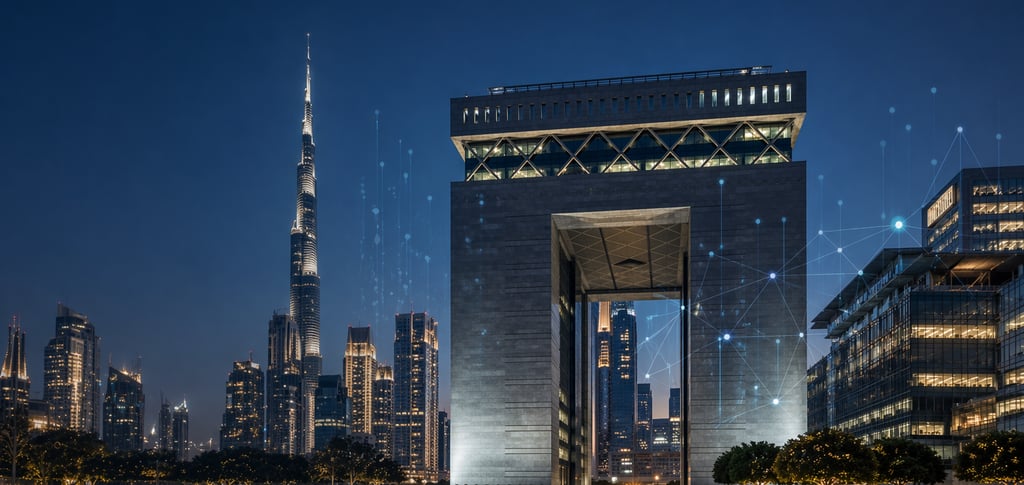
The evolution of global financial centers has historically been shaped by regulatory sophistication, capital flows, and institutional trust. Today, a new variable is redefining that equation: artificial intelligence.
In this context, the Dubai International Financial Centre is taking a decisive step forward by positioning itself as the world’s first fully AI-native financial center. This is not a superficial layer of innovation, but a structural transformation designed to embed artificial intelligence across every dimension of its ecosystem.
From legal frameworks and regulatory architecture to business environments, talent development, and even urban design, DIFC’s strategy reflects a comprehensive rethinking of how financial ecosystems are conceived and operated.
This initiative signals a shift from digital adoption to intelligent infrastructure, where AI is not an auxiliary tool, but a foundational element driving efficiency, compliance, and strategic decision-making.
Beyond Technology: A New Financial Paradigm
What distinguishes DIFC’s approach is its systemic depth. Rather than focusing on isolated technological upgrades, the center is orchestrating a cohesive ecosystem where:
Regulatory processes become more predictive and adaptive
Financial institutions operate with enhanced data intelligence
Talent ecosystems are aligned with future skill demands
Urban and business infrastructures are designed to support AI-driven operations
This integrated model positions DIFC not only as a financial hub, but as a platform for next-generation financial architecture.
According to Essa Kazim, this initiative represents a milestone in reinforcing Dubai’s role as a global capital of financial innovation. The ambition is clear: to lead, not follow, in defining the standards of the future.
Economic Impact and Strategic Positioning
The projected outcomes reinforce the scale of this transformation. The initiative is expected to generate approximately USD 3.5 billion in economic value and create around 25,000 new jobs, strengthening Dubai’s position as a magnet for global capital, talent, and innovation.
However, the true impact extends beyond numbers.
By aligning artificial intelligence with governance, compliance, and long-term economic strategy, DIFC is establishing a model that addresses one of the most critical challenges in global finance today: how to scale innovation without compromising regulatory integrity and institutional trust.
This balance is particularly relevant for high-net-worth individuals, global investors, and multinational family structures, who increasingly require jurisdictions capable of offering both technological advancement and legal certainty.
Implications for Global Wealth Structuring
For internationally exposed families and investors, this development is more than a regional milestone, it is a signal of where the future of financial structuring is heading.
Jurisdictions that successfully integrate AI into their regulatory and operational frameworks will likely offer:
Greater efficiency in cross-border structures
Enhanced transparency and compliance management
More sophisticated risk assessment capabilities
Improved coordination between financial institutions globally
DIFC’s AI-native positioning places it at the intersection of these capabilities, reinforcing its relevance in complex, multi-jurisdictional wealth strategies.
Conclusion: Leadership Through Architecture
DIFC’s initiative is not simply about adopting emerging technology. It is about redefining the architecture of financial ecosystems.
By integrating artificial intelligence at a structural level, the center is establishing a new benchmark for how financial hubs can evolve, combining innovation, governance, and long-term strategic vision.
In an increasingly complex global environment, this model represents a clear direction for the future of finance, one where intelligence is embedded, systems are adaptive, and leadership is defined by the ability to anticipate and shape what comes next.
At Larson Wealth & Legacy, we closely monitor structural shifts in global financial centers to ensure our clients are positioned within the most advanced, secure, and strategically aligned jurisdictions.
If your wealth structure involves multiple jurisdictions, international exposure, or long-term legacy planning, now is the time to evaluate how emerging financial ecosystems like DIFC can enhance your strategy.
Connect with our team to explore how AI-driven financial environments can be integrated into your global wealth architecture with precision, security, and long-term vision.
LARSON WEALTH & LEGACY 2026. ALL RIGHTS RESERVED
We do not carry out any activity in the United Arab Emirates regulated by the Central Bank of the UAE, the SCA, the Insurance Authority or the DFSA, unless expressly authorized. Any references to investments, financial products, trusts or similar structures are for general informational purposes only and do not constitute an offer of regulated services in the UAE or the DIFC.


Developed by: AVANCE propaganda